

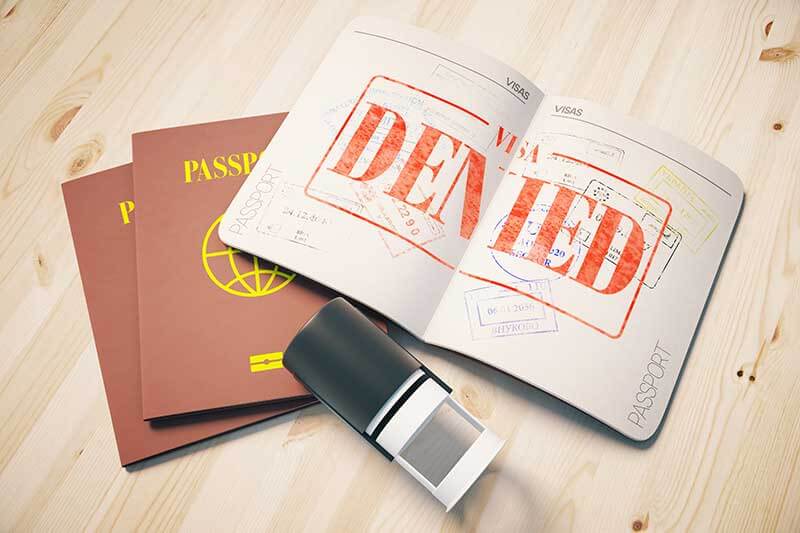
Even if you were the victim of a crime, there are still U visa denial reasons that can lead USCIS to reject an application. Many people assume that meeting the basic requirements guarantees approval, but the reality is that USCIS reviews every case under strict criteria.
As a result, any mistake, inconsistency, or missing documentation can lead to a denial.
Understanding why USCIS denies U visas is the first step to avoiding common pitfalls or knowing what to do if you already received a denial. At Lluis Law, our Los Angeles immigration lawyers have experience representing crime victims in the United States.
LATINOS WITH OVER 60 YEARS EXPERIENCE
Tell Us Your Case
What is a U visa, who can apply, and when can it be denied?
A U visa is a nonimmigrant status created for victims of certain crimes who:
- Suffered substantial physical or mental abuse in the United States.
- Cooperated or are willing to cooperate with authorities in the investigation or prosecution of that criminal activity.
Congress created this visa in 2000 through the Victims of Trafficking and Violence Protection Act, with the goal of strengthening law enforcement’s ability to investigate and prosecute crimes such as:
- Domestic violence.
- Sexual assault.
- Human trafficking.
In addition to supporting the prosecution of these crimes, it also aims to protect victims who assist authorities. Still, meeting the basic requirements does not guarantee approval.
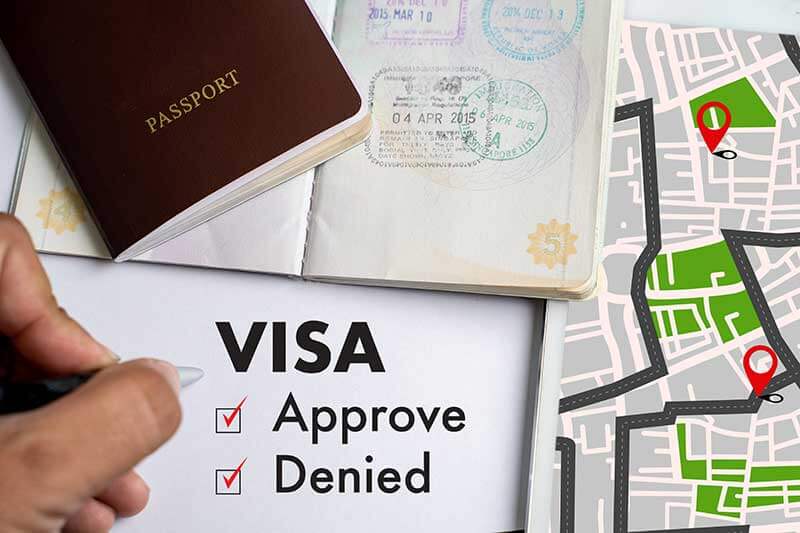
U visa denial reasons can include documentation errors, inconsistencies in the petition, inadmissibility issues, or not providing enough evidence, among others.
How do you prove cooperation with law enforcement?
Proving cooperation is not limited to reporting the crime. USCIS evaluates whether you acted in good faith throughout the investigation, including attending interviews, responding to requests from authorities, and providing the evidence required.
To support your cooperation, it is important to keep:
- Copies of police reports and case numbers.
- Records of dates and locations of interactions with police or the prosecutor’s office.
- Emails, subpoenas, or any official communication related to the case.
- Proof that you attended interviews or hearings.
Any contradiction between your statements and the documents can significantly weaken your case with USCIS.
How can you qualify for a U visa?
To qualify, the applicant must:
- Have been the victim of a qualifying crime under the USCIS list.
- Have suffered substantial physical or mental abuse as a result of the crime.
- Have information about that criminal activity.
- Have been helpful, be helpful, or be likely to be helpful in the investigation or prosecution of the crime.
- Show that the crime occurred in the United States or violated U.S. federal law.
- Be admissible to the United States or file a waiver request if applicable.
How do I know if I am eligible for a U visa?
You must have been the victim of a qualifying crime in the United States, suffered substantial physical or mental harm, have information about the crime, and have cooperated or be willing to cooperate with law enforcement.
The best way to evaluate your eligibility is to consult an immigration attorney with experience handling U visas.
Reasons a U visa is denied
U visa denials usually do not happen because the crime did not occur, but because the petition does not meet the specific requirements USCIS demands. These are the most common reasons:
No certification from a qualifying agency (Form I-918B)
Form I-918B is the most critical document in the petition. It must be signed by a law enforcement agency confirming that the applicant was the victim of a qualifying crime and cooperated in the investigation.
- Without this form properly completed and signed by the correct official, USCIS cannot approve the petition.
- Many denials happen because the certification is incomplete, contains errors, was signed by someone without authority, or because the agency refused to issue it.
If an agency refuses to issue the certification, an attorney can evaluate whether there is another certifying authority connected to the case, correct errors in the filing, or present new grounds to request the certification.
Not proving substantial physical or mental harm

A U visa is not only for someone who was the victim of a crime, but for someone who suffered a substantial impact as a result of that crime. USCIS requires objective evidence of harm. A personal statement without supporting documentation is usually not enough.
The strongest evidence includes medical or psychological reports, hospital records, therapist evaluations, photos of injuries, sworn statements from witnesses, and letters from shelters or support centers where you sought help.
Inconsistencies between your statement and the documents
The applicant’s personal statement, Form I-918, the I-918B certification, police reports, medical records, and prior immigration history should be consistent with each other.
If there are differences in dates, locations, names, or circumstances between what you say now and what you stated in prior asylum applications, TPS filings, or ICE interviews, USCIS may question your credibility and deny the case.
Before filing, it is wise to review all prior immigration documents and prepare explanations for any discrepancies.
Inadmissibility issues or a criminal record
Certain factors can create inadmissibility issues that complicate or block a U visa petition. This can include entries without inspection, prior removal orders, criminal convictions, and the use of false documents.
However, many of these obstacles can be addressed by filing Form I-192, which is a request for a waiver of inadmissibility.
To obtain it, the applicant must show evidence of rehabilitation, humanitarian need, and that the case serves the public interest. You can learn more about the types of immigration waivers available depending on your situation.
The crime is not on the list of qualifying crimes
A U visa only applies to victims of specific crimes recognized by USCIS, such as domestic violence, sexual assault, kidnapping, human trafficking, extortion, stalking, involuntary servitude, and others.
If the crime is not on that list, or if it cannot be clearly shown that it occurred in the United States or violated U.S. federal law, the petition will be denied.
In some cases, an attorney can argue that the crime fits within a recognized category even if it is not obvious at first glance, including attempts, conspiracies, or solicitation to commit those crimes.
Incomplete or late responses to USCIS requests
If USCIS issues a Request for Evidence (RFE) or a Notice of Intent to Deny (NOID) and the applicant does not respond on time or does not respond fully, the case can be denied for that reason alone even if the other elements are strong.
What should you do if there are inconsistencies between statements and documents?
Inconsistencies do not always invalidate a case, but they should be addressed proactively before you file. These are the most important steps:
- Review every piece of evidence with a professional to identify contradictions, where they come from, and how they can be explained.
- Prepare additional affidavits that clearly and honestly explain discrepancies in dates, locations, or names.
- Gather updated supporting documents that strengthen the current version of events.
- Organize all evidence chronologically so the file tells a coherent story from start to finish.
An attorney can help you prepare a unified case theory, making sure each element clearly connects the crime you experienced to the protection you are requesting.
Annual U visa cap, pending cases, and wait times
The U visa has an annual cap of 10,000 principal U-1 visas, not including certain qualifying family members.
Because of that limit and the high volume of pending cases, wait times can be very long. USCIS has stated that this cap has been reached every year since fiscal year 2010.
The large backlog has led to waits of many years for a final decision.
In response to the backlog, USCIS implemented the bona fide determination process, which allows certain applicants to receive temporary protection from removal and work authorization while they wait for a final decision.
How long does it take for a U visa to be approved?
Wait times can stretch for many years, especially due to the annual cap and the backlog.
However, through the bona fide determination process, some applicants may receive temporary protection and work authorization while waiting for the final decision.
What are the reasons a visa can be denied?
In general, visas can be denied due to:
- Not meeting eligibility requirements for the category requested.
- Incomplete documentation.
- Inadmissibility issues.
- Fraud.
- Misrepresentation.
- Insufficient evidence of the purpose of the trip or stay.
How long does it take to get a green card through a U visa?
After the U visa is approved, the recipient must maintain that status for at least three consecutive years before applying for permanent residence. That period must be met without interruptions or unauthorized departures from the country.
Once the three years are completed, you may file Form I-485 for adjustment of status. The average time to receive a final decision is often 12 to 24 months, depending on USCIS workload and the local office involved.
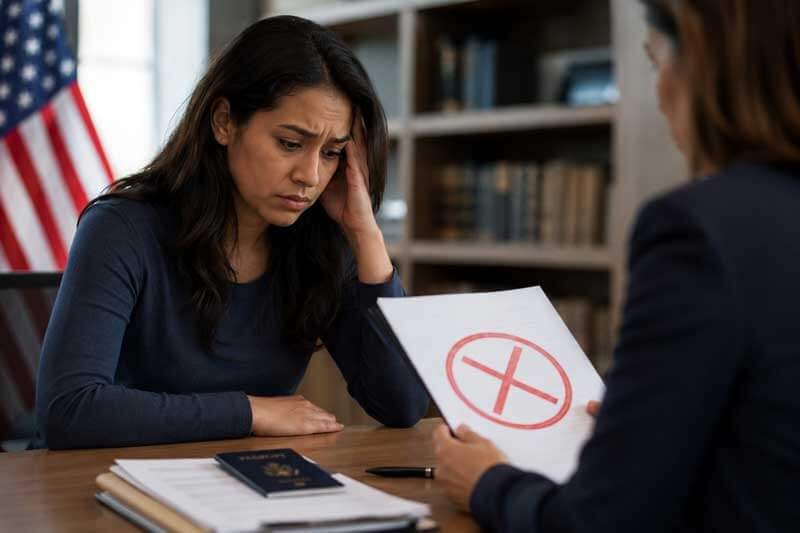
What happens if my U visa is denied?
If USCIS denies your U visa petition, your immigration status returns to what you had before you applied.
If you were in the United States without lawful status, you may be at risk of detention and removal again. Also, by filing the petition, you have already provided personal information to the government.
That said, a denial does not always mean the process is over. There are several possible options:
Appeal after a U visa denial
In many cases, you may file Form I-290B to appeal or request a motion. Typically, the deadline is 30 calendar days from the date of the decision, or 33 days if USCIS mailed the decision.
You may also be able to file a case in federal court, although federal courts can only review limited types of U visa denials. You can learn more about the immigration appeal options that may be available in your case.
Refiling with additional evidence
If the denial was based on missing evidence or fixable errors, you may refile after correcting the issues that caused the denial. You should not submit the exact same petition without changes.
Motion to reopen
If you have new evidence that was not included originally, you may request that the case be reopened.
If you face removal proceedings because of the denial, you can review options for cancellation of removal and discuss with an attorney whether you may qualify for a defense.

If you have a hearing scheduled, having immigration court representation may be essential.
What other immigration options do I have if my U visa is denied?
If your petition was denied or you do not qualify for a U visa, other options may be available depending on your situation:
- VAWA: If you were abused by a U.S. citizen or lawful permanent resident spouse, parent, or child, you may be able to file a self-petition.
- T visa: If you were a victim of labor or sex trafficking and cooperated with authorities, you may qualify for protection through a T visa.
- Asylum: If you fear returning to your country due to persecution or serious threats, you can evaluate whether asylum may apply.
- Cancellation of removal: If you have been in the United States for at least 10 years, have good moral character, and can show that your removal would cause exceptional and extremely unusual hardship to your spouse, parent, or child who is a U.S. citizen or lawful permanent resident.
If you are in the country without lawful status and considering your options, you can review the consequences of being out of status and also how to handle an encounter with ICE if you are approached by immigration agents.
How to strengthen a U visa petition from the start
The best way to avoid a denial is to prepare a strong filing package before submitting your petition. These are the most important steps:
- Obtain the I-918B certification from the correct law enforcement agency and confirm that it is properly completed and signed.
- Gather harm-related evidence with medical records, psychological evaluations, and any other documents that show the physical or mental impact of the crime.
- Build a consistent timeline that matches all documents and prior statements.
- Review your immigration history to identify potential inadmissibility issues and prepare any needed waivers before filing.
- Respond on time to any USCIS requests for additional evidence.
- Speak with an attorney before submitting anything to identify risks that are not always obvious to applicants.
Frequently asked questions about U visas and possible denials
What is happening with U visa cases?
Because of the annual 10,000 visa cap and the high volume of pending petitions, wait times can extend for many years.
USCIS implemented the bona fide determination process to provide temporary protection to certain applicants while they wait for a final decision.
Can someone with a U visa be deported?
Someone with an approved U visa has protection from removal as long as they maintain their status.
However, if the visa is revoked or the petition is denied, the risk of removal can return. USCIS may revoke a U visa if it determines the person poses a risk to public safety or national security.
What can a U visa waive?
Through Form I-192, a U visa may waive certain grounds of inadmissibility, including entry without inspection, prior unlawful presence, and some criminal history. Not every ground is waivable, and each case must be evaluated individually.
What if my green card application through a U visa is denied?
If your green card application based on a U visa is denied, you may be able to appeal or explore other paths to lawful permanent residence.
An attorney can evaluate whether there were errors in the decision or whether new options may be available based on your situation.
Why was my U visa denied?
The most common reasons include not having an I-918B certification from a qualifying agency, not providing enough evidence of the harm suffered, or inconsistencies in the petition.
How Lluis Law can help if your U visa was denied
A U visa denial does not always mean the process is over, but acting quickly with the right strategy is critical.
At Lluis Law, we evaluate your case, identify what caused the denial, and explain what options may be available, whether that is an appeal, refiling, or another immigration protection pathway.
If you have a pending hearing or are facing removal proceedings because of the denial, contact us to evaluate your situation before you make decisions that could affect your future in the United States.
LATINOS WITH OVER 60 YEARS EXPERIENCE
Tell Us Your Case
