
How long does TPS take to be approved? To answer this question, it is important to distinguish between USCIS historical processing times and what may happen in an individual case.
For reference, USCIS reported a national median of 13.6 months for Form I-821 during fiscal year 2026 through August 30, 2026. However, actual processing times may vary depending on the circumstances of each case.
Latino attorneys with over 60 years of combined experience
Tell us about your case
Speak with our team about your options and next steps.
English & Spanish
How Long Does It Take for TPS to Be Approved?
To request Temporary Protected Status (TPS) in the United States, you must file Form I-821 with USCIS. There is no single guaranteed processing time. How long a case takes can depend on factors such as:
- Whether it is an initial application or a re-registration.
- The number of applications received.
- The supporting documents submitted.
- Whether biometrics are required.
- Identity and security checks.
- A request for additional evidence.
- Errors or missing information.
- The USCIS workload.
For these reasons, two applications filed around the same time may not receive decisions at the same time.
You can check the official USCIS processing times for the available estimates for the relevant form.
What Does the 13.6-Month Median Mean?
The 13.6-month figure is a historical national statistic.
A median means that:
- Approximately half of the completed cases took that amount of time or less.
- The other half took that amount of time or longer.
- It does not represent a maximum processing time.
- It cannot be used to predict the exact approval date of a pending case.
In addition, current processing times published by USCIS may use different metrics and can change as the agency updates its data.
Can an Initial TPS Application Take Longer Than a Re-Registration?
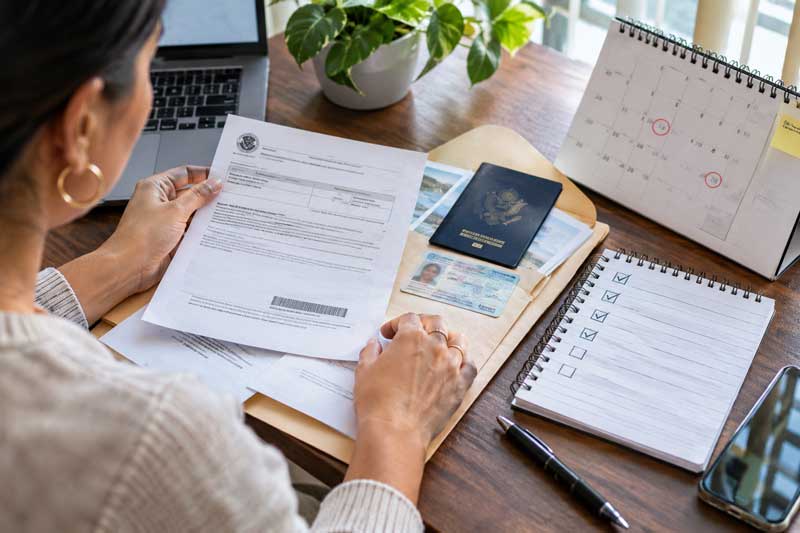
Yes, it can. For an initial TPS application, USCIS must review certain information for the first time, including:
- Identity.
- Nationality.
- Date of entry into the United States.
- Continuous residence.
- Continuous physical presence.
- Eligibility requirements.
- Background and security checks.
What Happens During TPS Re-Registration?
When someone re-registers for TPS, USCIS may already have information from previous TPS periods.
However, this does not guarantee a quick approval. USCIS may still:
- Request new evidence.
- Require biometrics.
- Conduct additional checks.
It is also important to re-register within the applicable filing period. A late filing may require an explanation and additional documentation.
If DHS decides to continue protection for a country, it may be helpful to understand how a TPS extension works.
What Happens After You File a TPS Application?
After accepting the filing, USCIS sends a receipt notice, generally on Form I-797C, with a receipt number that allows you to identify and track your case.
If you also filed Form I-765 for employment authorization, you will receive a separate receipt number for that application. The process may involve the following steps:
USCIS Receives Form I-821
Each application must establish the following, as applicable:
- Nationality and identity.
- Date of entry into the United States.
- Continuous residence.
- Physical presence.
- Other applicable TPS requirements.
Supporting documents may include passports, birth certificates, identity documents, Form I-94 records, lease agreements, bank statements, and employment, school, or medical records.
Documents that are not in English must be accompanied by a complete English translation and the appropriate certification from the translator.
USCIS May Require Biometrics
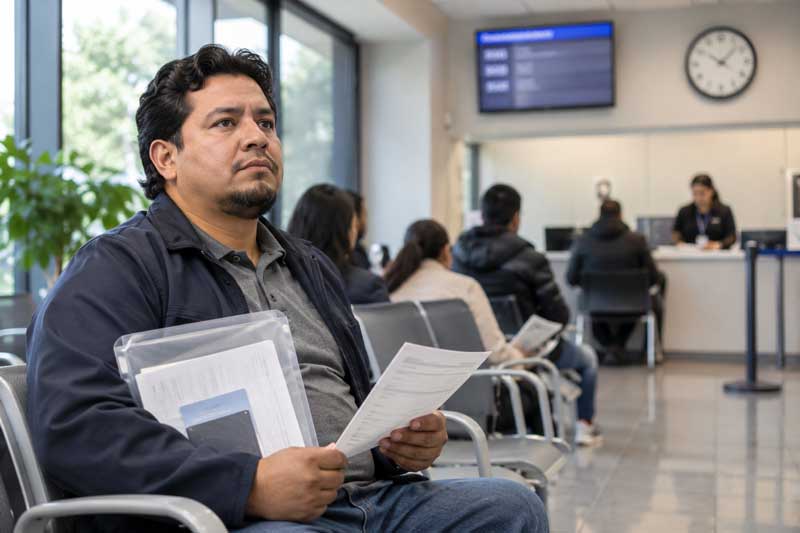
When necessary, applicants will receive a notice instructing them to visit an Application Support Center.
USCIS may use this information to conduct identity, background, and security checks.
Missing a required appointment can delay the application.
USCIS Reviews the Evidence
The agency reviews the documentation and determines whether the applicant meets the applicable requirements.
If additional information is needed, USCIS may issue a Request for Evidence (RFE).
USCIS Makes a Decision
After completing its review, USCIS may approve or deny TPS and will send the corresponding notice.
How Long Does a TPS Work Permit Take?
To request a work permit based on TPS, an applicant must file Form I-765.
Applicants can file Form I-765 together with Form I-821. They do not necessarily have to wait for TPS approval before applying for employment authorization.
This matters because:
- Forms I-821 and I-765 are different applications.
- Each may have its own receipt number.
- Their processing times may differ.
- USCIS may decide Form I-765 while Form I-821 remains pending.
USCIS also provides for a temporary Employment Authorization Document (EAD) category for certain applicants whose Form I-821 remains pending and who appear eligible for TPS.
That is why anyone who filed both forms should track each receipt number separately.

What Can Delay TPS Approval?
Not every delay means USCIS intends to deny an application.
Circumstances that may increase processing time include:
- Incomplete forms.
- Missing signatures.
- Insufficient evidence.
- Filing or fee-related issues.
- Requests for additional evidence.
- Notices of Intent to Deny.
- Pending biometrics appointments.
- Security checks.
- Address changes that were not reported.
- A high volume of applications.
Can an RFE Increase the Wait Time?
Yes, it can.
An RFE means USCIS needs additional information or documents before making a decision.
For example, the agency may request evidence of:
- Nationality.
- Identity.
- Date of entry.
- Continuous residence.
- Physical presence.
- Immigration history.
The notice specifies what the applicant must provide and the deadline for responding.
Submitting an organized application with the necessary supporting documents from the beginning can help prevent avoidable delays.
How Can You Tell if Your TPS Was Approved?
USCIS provides a receipt number to track your application.
The number contains 13 characters: three letters followed by 10 numbers.
You can enter it into the official USCIS Case Status Online tool to check for updates such as:
- Case received.
- Biometrics appointment scheduled.
- Request for Evidence sent.
- Case under review.
- Decision issued.
- Case approved.
Online case status updates show what has happened with your application, but they do not tell you exactly how much longer a decision will take.
It is also important to keep your address up to date with USCIS so that you receive notices about your case.
What Should You Do if Your TPS Application Takes Longer Than Normal?
First, compare your filing date with the processing information published by USCIS.
The time shown in the processing times tool is a statistical reference. It does not mean every case must be decided within that exact timeframe.
If your case is beyond the timeframe in which USCIS allows an inquiry, you can use the agency’s tools to ask about your application.
Before doing so:
- Check your case status.
- Review the notices you have received.
- Confirm that you responded to any RFE.
- Check for any pending appointments.
- Make sure USCIS has your correct address.
- Review Forms I-821 and I-765 separately.
Can You Pay to Speed Up TPS Processing?
Premium processing is not available for Form I-821.
Therefore, there is no additional fee you can pay to guarantee a TPS decision within a specific period.
In certain circumstances, USCIS allows applicants to request expedited processing. However, these requests are discretionary, must meet the agency’s criteria, and may require evidence demonstrating the urgency.
Can TPS Lead to Lawful Permanent Residence?
TPS alone does not automatically make someone a lawful permanent resident.
However, some TPS holders may have an independent path to permanent residence. That is why it is important to review who may qualify for a Green Card with TPS based on the circumstances of each case.
Depending on your situation, you may need to consider:
- A family-based petition.
- An employment-based immigration category.
- Adjustment of status.
- Asylum in the United States.
- Other immigration benefits or protections.
It may also be helpful to understand how to obtain a Green Card and the paths that may be available.
Whether any of these options is available depends on your background, how you entered the United States, and other details of your case.
What Happens if a TPS Designation Changes or Ends While You Wait?
TPS depends on a designation issued by the U.S. government for each country. These designations may be:
- Extended.
- Modified.
- Redesignated.
- Terminated.
Before a designation expires, the Secretary of Homeland Security must also review conditions in the country and decide whether to extend or terminate TPS. That determination must be made at least 60 days before the expiration date.
In some cases, the end of a TPS designation can also affect a person’s work authorization and immigration situation.
How Can You Check the TPS Status of Your Country?
A pending application is affected by more than USCIS processing times. It is also important to consider the current status of the relevant country designation.
Each country may have different dates and conditions, so it is important to check country-specific information. For example:
- The current status of TPS for Venezuelans.
- Updates concerning TPS for Honduras.
DHS publishes official information about TPS, while USCIS maintains information about each specific designation.
If protection for a country changes or ends, it may also be necessary to review other available immigration options before making decisions about remaining in the United States, working, or pursuing other applications.
Frequently Asked Questions: How Long Does TPS Take to Be Approved?
How Long Does It Take for TPS to Be Approved?
There is no guaranteed timeframe. For reference, USCIS reported a historical national median of 13.6 months for Form I-821 in fiscal year 2026 through August 30, 2026.
An individual case may take less or more time.
How Many Months Does USCIS Take to Approve a Case?
It depends on the form and the immigration benefit requested.
There is no single processing time that applies to every immigration application. For TPS, you should specifically check the processing time for Form I-821.
How Can You Tell if Your TPS Was Approved?
You can check your case status using the receipt number USCIS provided.
When USCIS makes a decision, it updates the case record and sends a notice to the applicant.
Which TPS Holders Qualify for a Green Card?
TPS alone does not provide a Green Card.
Some people may qualify for permanent residence through an independent path, such as a family-based petition, an employment-based category, or another immigration benefit. Eligibility must be assessed individually.
How Long Is TPS Granted For?
A country’s initial TPS designation lasts between 6 and 18 months, and extensions may be granted for 6, 12, or 18 months. However, the validity of an individual TPS approval depends on the applicable designation.
This should not be confused with the time USCIS takes to approve someone’s Form I-821.
Immigration Lawyers in Los Angeles to Review a Pending TPS Application
An application taking longer than expected does not necessarily mean something is wrong. However, an RFE, a USCIS notice, a pending work permit, or a delay beyond normal processing times may warrant a closer review.
At Lluis Law, we can review the forms you filed, the notices you received, the status of Forms I-821 and I-765, and other factors that may be affecting your case.
If you are in Los Angeles or need guidance about your immigration case, you can contact our immigration lawyers in Los Angeles, David and Ramiro Lluis.
Latino attorneys with over 60 years of combined experience
Tell us about your case
Speak with our team about your options and next steps.
English & Spanish